
Welcome to our online onboarding process for predictive maintenance services! To receive your sensors and start monitoring machine health, you must first complete the digital onboarding. This process ensures we ship the correct hardware and configure your dashboard for accurate vibration analysis. Complete these steps to avoid delays in your shipment.
How It Works
Your onboarding representative will initiate the online process for you. Follow the steps below to complete the process :
Step 1: Check Your Email
- You will receive an invitation email. Please make sure to check your inbox and spam folder in case the email lands there.

Step 2: Create Your Account
- Open the email and click on the Create Account button.
- Set a password for your account and log in to your account.
Step 3: Verify Company Details
Once logged in, you'll need to check your company details.

- VAT and PO Numbers:
- You don’t need to enter the VAT and PO numbers at the start.
- The VAT number is required only for companies in the EU.
- The PO number is optional; smaller organizations may not use it, but larger organizations typically require it for invoicing.
- Invoicing Address: This is required to complete the onboarding process.
- Shipping Address: Only configure this if it’s different from the regular address.
Step 4: Invite a New Team Member (Optional)

If you'd like to invite someone else from your team, you can assign them specific roles based on what they need to be updated about. This helps us reach the right people and avoid unnecessary calls (e.g., calling the CEO for irrelevant updates).
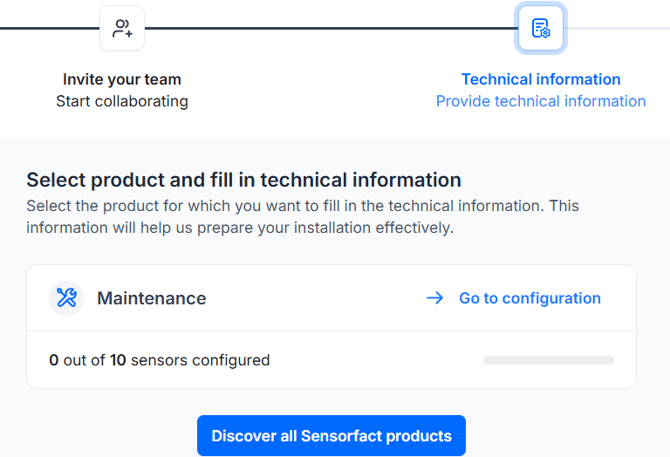
Step 5: Provide Technical Information
- Click on Go to Configuration to begin configuring your assets.
- Your onboarding representative pre-set the amount of sensors from the contract.
Configure Your Assets:
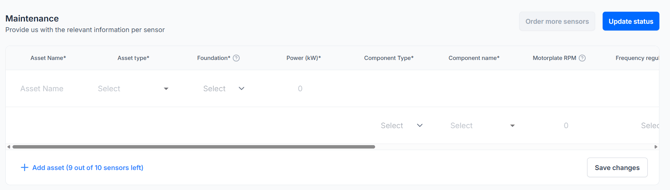
- Asset name: Give your asset a unique name.
- Asset Type: Select the asset type from the dropdown. If you can’t find it, select “Unknown”.
- Foundation: Select Rigid for machines bolted to concrete or a very stiff structure;
and flexible for machines mounted on a relatively flexible structure. - Power (kW): Power of the motor in kW.
- Component type: Select the asset type from the dropdown. If you can’t find it, select “Other”.
- Component name: Give your component a unique name.
- Motor plate RPM: Enter the motor RPM as shown on the motor plate.
- Frequency regulation: Select whether your motor uses a VSD.
- Set speed: Enter the RPM you usually operate at. If there is no usual set speed, enter the minimal RPM you operate at.
- Sensor type: Select the type of sensor used for this component.
- Electricity proximity: Enter the distance between the sensor and a 24V/120V/230V power source. This is relevant for regular sensors only (no battery-powered or ATEX sensors).
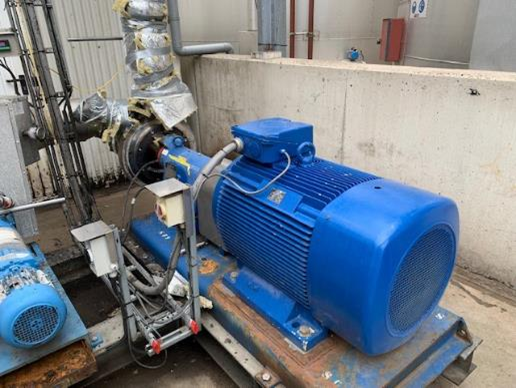
- Image: Add a clear image of the asset, including its surroundings.
- + Add component: Add another sensor on the same asset (For example, two different bearings on the same asset).
Step 6: Review and Save Changes
After making your final adjustments, click on Save Changes.
Step 7: Follow-up meeting
Your onboarding representative will contact you to arrange the follow-up meeting.
During this meeting, you will review and discuss the technical information you provided. The onboarding representative will also guide you on where to install the sensor on the asset and will verify the number of bridges required.